
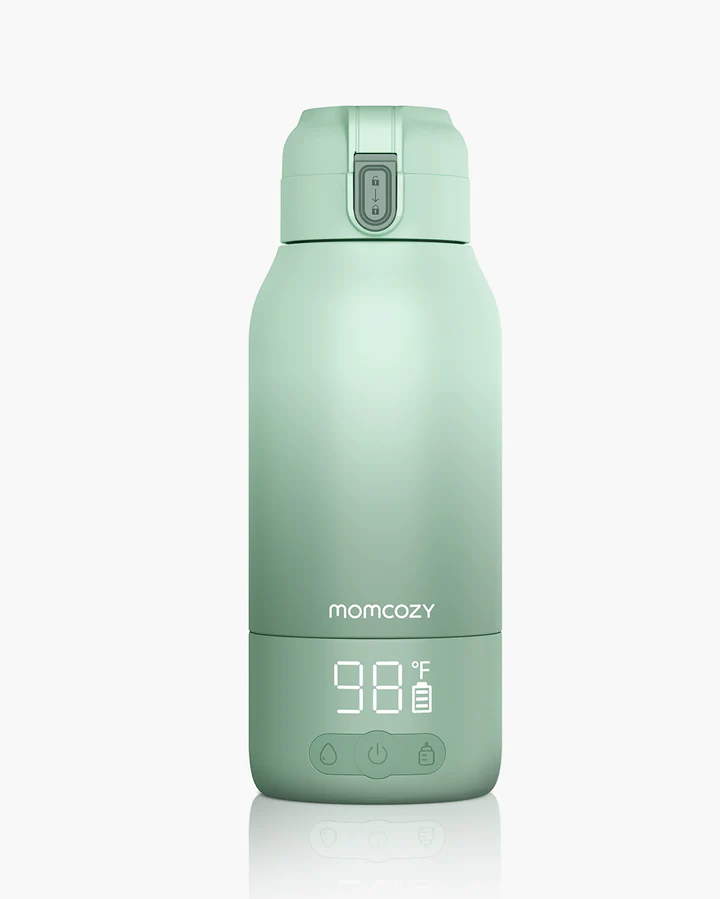
The safest target is simple: warm milk should feel warm, not hot, and prepared formula should follow label mixing plus strict time limits—use it within 2 hours, or refrigerate it and use it within 24 hours. For breast milk, avoid microwaves entirely; FDA guidance favors gentle warming methods that reduce hot spots and overheating.
Trying to warm a bottle while the baby is crying, the milk is chilled, and you are racing the clock is stressful. The good news is that a few temperature and storage rules make the process much more predictable. This guide explains what bottle warmers actually do, which features matter most, and how to warm safely without wasting milk.
What a Bottle Warmer Is Supposed to Do
A bottle warmer is a heating device designed to bring breast milk, formula, or mixed feeding bottles to a comfortable feeding temperature without creating hot spots. In practical terms, the goal is not “hot”; it is a uniform, feed-ready temperature that feels warm to the touch.
That distinction matters because microwave heating can create uneven temperatures, which is why FDA guidance says not to microwave breast milk or formula. A good warmer gives you more control over the heating rate, which is especially useful when you are dealing with expressed breast milk, refrigerated formula, or a bottle that needs to be ready quickly but safely.
Warm, Not Hot: The Usable Temperature Target
The best sensory check is still the simplest one: the bottle should feel warm, not hot. FDA health-professional guidance on infant formula uses that exact practical standard.
If you want a more operational definition, think in terms of comfort and consistency rather than chasing a precise heat number from the warmer. For caregivers, the real decision variable is whether the milk is evenly warmed enough to feed immediately, without burn risk or quality loss from excessive heat.
When a Warmer Is Worth Using
Bottle warmers are most useful when you need repeatability. That includes nighttime feeds, daycare preparation, pumping schedules, and travel situations where a caregiver wants a bottle ready at the right temperature without guessing.
They are less useful if you are already feeding room-temperature milk, or if your routine allows time to let a refrigerated bottle warm gradually. They are also not a substitute for safe storage practices: formula and breast milk still need to follow time-and-temperature rules even if the warming step is perfect.
Choosing the Right Warmer for Breast Milk, Formula, or Travel
The right warmer depends on the liquid you are using, how fast you need it, and whether you are at home or on the go. The biggest mistake is buying for convenience alone and ignoring milk type, heating control, and cleanup burden.
For breast milk, the main concern is gentle, even warming. For formula, the key issues are safe mixing, storage limits, and discarding leftovers after feeding. For travel, portability and power source matter just as much as heating speed.
Breast Milk: Gentle Heat and No Microwave Use
Breast milk should not be microwaved. FDA guidance says microwaves can create hot spots, which is a burn risk and can make temperature inconsistent. A bottle warmer is a better fit because it heats more evenly.
A practical home-use warmer for breast milk should support low, controlled heat rather than aggressive high-temperature settings. Warm water baths or device-based gentle heating are the safest patterns, especially if you are trying to preserve milk quality and avoid overheating.
Formula: Follow the Mixing Rules First
Formula safety starts before warming. FDA guidance distinguishes three types:
For higher-risk infants—babies 2 months and younger, premature infants, infants with weakened immune systems, or infants receiving medical treatment such as chemotherapy—liquid ready-to-feed formula is the safest option. If that is unavailable, liquid concentrate is preferred over powdered formula.
That hierarchy matters because no bottle warmer can compensate for unsafe preparation. A warmer should fit your formula workflow, not replace it.
Travel-Friendly Options: Power Source and Portability
If you feed outside the home, the most important technical question is not only “How fast does it heat?” but “How is it powered?” Portable warmers may use batteries, car adapters, or insulated systems that retain heat until feeding time.
Travel convenience is useful, but it should not compromise safety. For caregivers on the move, the best setup is one that keeps the bottle in a safe temperature range long enough to feed, without encouraging over-warming or long unrefrigerated storage.
Safe Warming Methods That Actually Work
A bottle warmer is only useful if the method behind it is sound. The FDA guidance across formula and breast milk is consistent: avoid microwaves, use gentle heat, and respect storage and discard thresholds.
A reliable warming routine has three parts: correct preparation, controlled heating, and a quick final check before feeding. Skipping any one of those steps is where problems start.
Step 1: Prepare the Bottle Correctly
For formula, measure the water first, then add the formula exactly as the label instructs. Wash your hands with soap and water for at least 20 seconds before preparing the bottle.
For infant feeding parts, sanitation matters. Before first use, boil bottles, nipples, caps, rings, and valves for 5 minutes. After use, clean them in a dishwasher with hot water and a heated drying or sanitizing cycle, or hand-wash them in a formula-only basin, rinse, and air-dry.
Step 2: Warm Gently and Evenly
FDA guidance for warming bottles says hot tap water for 1 to 2 minutes is acceptable, or warm water on the stove. The practical goal is body temperature or a warm-feeling bottle, not a hot one.
If you are using a warmer, choose a model that heats gradually and evenly. Fast high-heat devices are riskier because they can overshoot, especially with smaller volumes or bottles that start near room temperature instead of refrigerated.
Step 3: Check Before Feeding
Always test the bottle before offering it. The usual practical check is to drip a little on the inside of your wrist or feel the bottle externally: it should be warm, not hot.
If the bottle feels hot or unevenly heated, let it cool before feeding. That extra minute is worth it because the main safety failure is not a bottle that is slightly cool; it is a bottle that burns or feeds inconsistently.
What the Label, Clock, and Fridge Say
Temperature is only half the story. Time and storage conditions matter just as much, especially for formula and breast milk that may be warmed, cooled, or delayed.
FDA guidance gives caregivers a few hard boundaries that are easy to remember: prepared formula should be used within 2 hours, refrigerated prepared formula within 24 hours, and leftover formula after feeding should be discarded. For breast milk, room-temperature storage is up to 4 hours at 77°F (25°C) or colder, refrigerated storage is up to 4 days, and frozen storage is best within 6 months and acceptable up to 12 months.
The 2-Hour Rule
For perishable foods, FDA guidance says refrigerate or freeze within 2 hours of being at room temperature. If the room is above 90°F, the limit is 1 hour.
That rule is especially relevant for baby feeding because bottles often sit out during prep, travel, or nighttime feeding. A bottle warmer should fit within those limits, not extend them.
Breast Milk Storage Limits
For breast milk, the key operating ranges are:
Those ranges are useful because they tell you when warming makes sense and when a bottle should have stayed cold instead. If you are consistently warming milk that has sat out too long, the problem is storage workflow, not the warmer itself.
Formula Storage and Leftovers
Prepared formula should be used within 2 hours if left out, or within 24 hours if refrigerated. Leftover formula in the bottle after feeding should be discarded, not saved.
That discard rule matters because saliva introduces bacteria. Refrigeration does not make leftover bottle contents safe to reuse once the baby has fed from it.
Choosing Features That Actually Matter
When buyers compare bottle warmers, the useful features are usually the ones that reduce variability and fit the feeding routine. Fancy extras are less important than stable temperature control and easy cleaning.
The best feature set depends on whether you are warming breast milk, formula, or both. It also depends on whether you need a countertop unit, a compact travel device, or a simple method for occasional feeds.
Heat Control and Consistency
The most important feature is controlled warming. A device should heat gradually enough to avoid overheating, especially for breast milk.
Look for simple, repeatable settings rather than aggressive “fast heat” claims. The reason is practical: smaller volumes, different bottle materials, and starting temperatures can change how quickly a bottle warms. A stable warming curve is more useful than a single peak speed number.
Cleanup and Maintenance
A bottle warmer should be easy to keep sanitary because feeding equipment already has enough cleaning steps. The bottle itself, nipples, caps, rings, and valves need routine cleaning; the warmer should not add a complicated residue problem.
For pump-related feeding routines, FDA guidance also emphasizes cleaning milk-contact parts separately and replacing any tubing that looks moldy or cloudy. That kind of hygiene discipline matters just as much as the warming device, because contamination risk is often workflow-related rather than device-related.
Home Use vs. Travel Use
For home use, stability and easy cleanup usually matter most. For travel, power source and portability move to the top of the list.
A home unit can be larger and more consistent. A travel unit should be compact, easy to power in a car or with batteries if needed, and simple enough that it does not tempt you to overheat the bottle just to save time.
Common Mistakes and How to Avoid Them
Most bottle-warming problems come from a few repeat errors: overheating, using unsafe water, ignoring storage times, and treating leftover milk as reusable.
These are preventable with a clear process. The best method is the one you can repeat every time without guessing.
Mistake 1: Microwaving Milk
Do not microwave breast milk or formula. The problem is uneven heating, not just speed.
If you need a quick warm-up, use hot tap water, a controlled warmer, or another gentle warming method. The aim is predictable temperature, not maximum heat.
Mistake 2: Reusing Leftovers
If the baby does not finish the bottle, discard what is left. Do not put it back in the fridge.
That rule is non-negotiable because bacteria from the baby’s mouth can multiply, even if the bottle is refrigerated afterward. A warmer cannot fix that risk.
Mistake 3: Warming Without a Storage Plan
A bottle warmer should not be used to “save” milk that is already outside safe time windows. If milk has sat too long, the correct move is to discard it.
For formula, the key limits are 2 hours at room temperature and 24 hours refrigerated once prepared. For perishable items more broadly, the 2-hour rule still applies, with a shorter 1-hour limit above 90°F.
Practical Buying Checklist
If you want a bottle warmer that works well in real life, focus on the features that protect safety and consistency first.
What to Look For
What to Skip
- Anything that encourages overheating
- Devices that require guesswork
- Features marketed for speed but not control
- Systems that are hard to clean
- Products that make you less likely to follow storage and discard rules
Best-Fit Scenarios
- Home routine: Choose a stable countertop warmer with repeatable settings
- Travel: Choose a compact unit with a reliable power source
- Breast milk feeding: Prioritize low, gentle heat
- Formula feeding: Prioritize correct preparation, storage, and discard rules before warming convenience
Final Takeaway
A bottle warmer is most useful when it gives you one thing: predictable, gentle heat without hot spots. The safest routine is to prepare milk correctly, warm it only as needed, check that it feels warm not hot, and follow the storage clock every time.
If you remember only three rules, make them these: do not microwave, do not reuse leftovers, and do not ignore the 2-hour and refrigeration limits. That combination does more to protect feed safety than any extra feature on the box.