
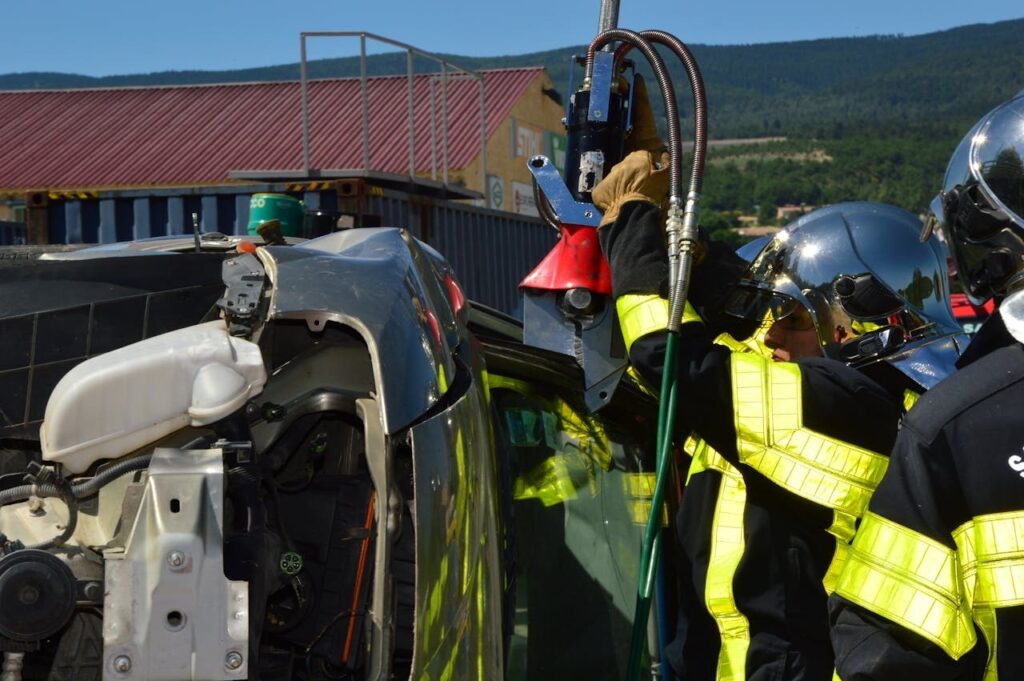
It starts with the noise. Or maybe the silence. It depends on the accident. A screech of tires, a sickening thud on the football field, or just the weird, hollow sound of a head hitting the pavement after a slip on the ice. Then comes the fog. It isn’t like being tired. It is a thick, heavy blanket that wraps around the mind and refuses to let go.
We call them “accidents,” but that word feels too small for the wreckage left behind. The person looks the same. Two eyes, a nose, a mouth. No cast on the leg. No crutches. But ask them to organize a grocery list or handle a loud restaurant, and you see the cracks. The wiring is frayed. The signal is getting lost in the static.
The Invisible Injury Trap
Here is the problem with brain injuries. They are invisible. If you walk into a courtroom with a missing arm, the jury gasps. They get it immediately. Loss of limb equals a big problem. But walk in with a Traumatic Brain Injury (TBI), and you might look perfectly healthy. You might even smile at the bailiff.
But they don’t see the headaches that feel like an ice pick behind the eyes. They don’t see the rage that bubbles up over nothing because the brain’s emotional regulator is broken. They don’t see the insomnia.
Insurance adjusters love this. They thrive on it. They will say, “Look, the MRI was negative.” And they are right. Standard MRIs often are negative. They aren’t powerful enough to show the microscopic shearing of nerve fibers, what doctors call Diffuse Axonal Injury. It is like trying to see a crack in a microchip using a magnifying glass. You just can’t.
So the victim sits there, feeling crazy. Feeling like maybe they are making it up. They aren’t. The hardware is damaged.
Navigating the Legal Minefield
This is where the rubber meets the road. You cannot fight this battle with just a nice attitude and a few medical records. You are going up against corporations that have entire departments dedicated to paying you as little as possible. They have playbooks for this. They know if they delay long enough, people get desperate. They settle for pennies just to pay the rent.
It is brutal. And it is unfair.
That is why you need a strategist. A specialist. Handing a complex TBI case to a generalist attorney who mostly handles fender benders is a recipe for disaster. You need a brain injury lawyer who understands medicine as well as the law. Someone who knows that a “mild concussion” is a medical term, not a life sentence of insignificance. They know how to bring in the neuroradiologists who use Diffusion Tensor Imaging (DTI) to show the actual damage. They know how to interview the family to prove the personality changes.
If you don’t have someone who can translate the medical jargon into a story of human loss, the case falls apart. It just does.
The Ripple Effect on Life and Spirit
Recovery is a grind. It is two steps forward, one step back. Maybe three steps back on bad days. Physical therapy, occupational therapy, speech therapy. It becomes a full-time job.
And amidst all the appointments and the fighting with insurance, the spirit takes a beating. It is easy to lose hope. It is easy to define yourself by the injury. “I am the broken one.” “I am the burden.” These thoughts are toxic. They slow down healing.
Sometimes, you have to look outside of Western medicine to find a sense of self again. The doctors can stitch the wound, but they can’t always stitch the soul. Finding spiritual answers can be the anchor in the storm. It is about remembering that there are laws of the universe that go beyond courtrooms and tort law. Finding that center, that quiet place of truth inside, can give a person the resilience to keep showing up to rehab when they just want to quit. It is not about ignoring the reality of the injury, but expanding the context of the life being lived.
The Financial Tsunami
Let’s talk money. Nobody likes to, but we have to.
Brain injuries are expensive. Astronomical, really. It isn’t just the ER bill. It is the lifetime of care.
Think about a 30-year-old construction worker who suffers a TBI. He can’t be on a roof anymore. His balance is shot. He can’t remember complex instructions. So maybe he can work a greeting job at a store? The wage gap there is massive. Over thirty years, that is hundreds of thousands of dollars in lost wages.
Who pays for that gap?
If you settle early because the insurance company dangled a quick check, you are signing away that future security. You are betting that you will miraculously get better. And if you don’t? You are on your own.
A Life Care Plan is essential here. This is a document prepared by experts that maps out every single cost for the rest of the victim’s life. Medications. Therapy. Home modifications. Potential assisted living in old age. The number is usually shocking. But it is the real number.
The Family Dynamic Shift
We forget about the spouses. The kids.
TBI is a family disease. When one person gets hurt, the whole ecosystem changes. The wife becomes the caregiver. The husband becomes the nurse. The dynamic of “partners” shifts to “patient and provider.” It kills intimacy. It breeds resentment.
And then the guilt sets in. The caregiver feels guilty for being angry. The injured person feels guilty for being a burden. It is a messy, painful cycle.
Counseling is usually non-negotiable. Families need to learn how to talk to this “new” person. They need to understand that when Dad yells, it isn’t because he doesn’t love them. It is because his frontal lobe, the braking system for emotions, isn’t working right.
The Science is Still Catching Up
We are still in the dark ages when it comes to the brain. We know more than we did twenty years ago, sure. But we still rely heavily on subjective testing.
“Follow my finger with your eyes.” “Count backwards from 100 by 7s.”
These tests are okay. But they can be gamed. And they fluctuate. A TBI survivor might ace a test at 9:00 AM after a good night’s sleep and coffee. But test them again at 2:00 PM after a loud lunch? They fail miserably. The brain has no stamina. This is called “neuro-fatigue.”
Defense lawyers love to catch the victim on a “good day.” They will hire investigators to follow you. If they catch you carrying a bag of groceries, they will play that video in court. “See? He can carry groceries! He is fine!”
They strip away the context. They don’t mention that you needed a two-hour nap immediately after that grocery trip.
The Long-Term Reality
The hardest part about this journey is the uncertainty. With a broken bone, the doctor says, “Six weeks in a cast, two weeks of PT, and you are good.”
With the brain, nobody knows.
You might see rapid improvement for three months and then plateau. You might have seizures show up two years later. The risk for things like dementia or Alzheimer’s goes up significantly. This is why the “wait and see” approach is dangerous legally, even if it is necessary medically. You have to litigate for the worst-case scenario while hoping for the best.
It requires a different kind of patience. It is not the patience of waiting for a bus. It is the patience of watching a plant grow. You don’t see the movement day to day. But look back after a year, and you see how far you have come.
Finding the New Normal
There is a grieving process that happens. You grieve the person you used to be. The one who could juggle five tasks at once. The one who didn’t get dizzy bending over to tie a shoe.
But once that grief is processed, there is room for something new. Adaptation is a powerful thing. Humans are incredibly resilient. We find workarounds. We use apps to remember things. We learn to say “no” to events that will drain us. We curate our lives to fit our new capacity.
And in that curation, there is often a newfound appreciation for the simple things. The quiet mornings. The loyal friends who stuck around. The clarity of just being alive.
The Role of Community
Isolation is the enemy.
It is easy to hide. It is easier to stay in the dark bedroom than to try to explain to a friend why you can’t go to the concert. But hiding makes the depression worse. It feeds the beast.
Connecting with other TBI survivors is crucial. There is a shorthand there. You don’t have to explain why you are wearing sunglasses inside. They just nod. They get it. That validation is worth more than any pill. It reminds you that you aren’t a freak. You are just injured. And you are healing.
Protecting Your Rights
If the injury was someone else’s fault, there is accountability to be had. It is not about greed. It is about responsibility. If a driver was texting and plowed into you, they shattered your world. The system is designed to balance that scale, however imperfectly.
But the system doesn’t work automatically. You have to push the button. You have to file the claim. You have to demand the fair value. And doing that while your brain is trying to reboot is nearly impossible.
That is why delegation is key. Delegate the legal fight. Delegate the medical coordination. Keep your energy for the one thing only you can do: heal.
What to Do Now
So, where does this leave you?
If you are reading this, you are probably scared. Or angry. Or just tired. That is valid.
First, document everything. Not just the doctor visits. Document the bad days. Keep a journal. “Woke up with a headache. Couldn’t tolerate the light. Snapped at the kids. Forgot the stove was on.” These details matter. They paint a picture of the daily struggle.
Second, be patient with yourself. The brain heals, but it heals on its own timeline. It doesn’t care about your work schedule or your vacation plans. It demands rest. Listen to it. Pushing through the pain doesn’t make you tough. It makes the injury worse.
Third, get the right team. Don’t go it alone. The legal system is designed to chew you up. It is designed to be confusing. Having a shield, someone who knows the game, changes the power dynamic. It forces the other side to treat you with respect.
The fog might not lift tomorrow. It might hang around for a while. But with the right support, you can learn to navigate through it. You can find new pathways. You can rebuild a life that looks different, perhaps, but is still valuable. Still yours.
Take a breath. You don’t have to solve it all today. Just take the next step.
Would you like me to create a checklist of specific “invisible symptoms” you should start tracking today to help build your case?