
Anyone researching a chipped tooth, discoloration, or a gap in their smile quickly runs into three overlapping terms: veneers, crowns, and bonding. All three can visually improve a tooth, and marketing materials sometimes use them almost interchangeably, but they solve different problems, involve different amounts of tooth alteration, and carry very different price points. Understanding the actual distinctions makes it much easier to have an informed conversation with a dentist rather than walking in assuming one option applies.
Composite Bonding: The Least Invasive Option
Dental bonding uses a tooth-colored composite resin, sculpted directly onto the tooth and hardened with a curing light, to repair minor chips, small gaps, or discoloration. It requires little to no removal of existing enamel, can typically be completed in a single visit, and is the most affordable of the three options.
The tradeoff is durability and scope. Bonding material is less stain-resistant and less durable than porcelain, generally lasting 4 to 8 years before needing touch-ups or replacement, and it isn't well-suited for larger structural issues or significant color changes across multiple teeth. It's best thought of as a targeted, lower-commitment fix rather than a comprehensive smile solution.
Porcelain Veneers: A Cosmetic-Focused Middle Ground
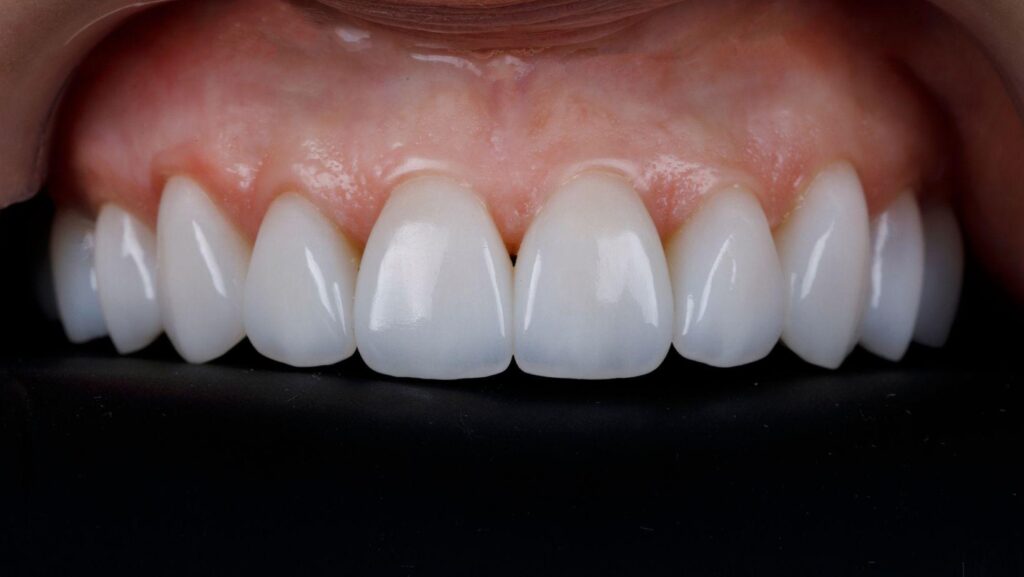
Veneers are thin porcelain shells bonded to the front surface of a tooth, primarily used to address cosmetic concerns — discoloration, minor gaps, chips, or slightly uneven shapes — across one or several teeth for a coordinated look. Traditional veneers require removing a thin layer of enamel to make room for the shell, which is a permanent alteration, though minimal-prep veneer options exist for certain cases.
Veneers generally last 10 to 15 years with proper care and offer strong stain resistance and a natural translucent appearance that many patients prefer over other restorative materials. They're primarily cosmetic, however — a veneer covers only the front surface and doesn't provide the same structural reinforcement as a crown, which matters for a tooth that's cracked or significantly weakened rather than simply cosmetically imperfect.
Dental Crowns: Built for Structural Problems
A crown covers the entire visible portion of a tooth, not just the front surface, which makes it the appropriate choice when a tooth has significant decay, a large filling that's compromised the tooth's structure, a root canal, or a crack that threatens the tooth's integrity. Because a crown provides full-coverage protection, it requires removing more of the natural tooth than a veneer does, and can be made from materials including porcelain, porcelain fused to metal, or zirconia depending on the location in the mouth and the strength needed.
Crowns are primarily a restorative solution rather than a purely cosmetic one, though modern all-ceramic crowns can also achieve a natural cosmetic appearance. They typically last 10 to 15 years as well, though this varies with material choice and bite forces.
How a Dentist Actually Decides Between the Three
The decision generally comes down to two questions: how much of the tooth's structure is actually compromised, and is the primary goal cosmetic or restorative? A tooth with a small chip and otherwise healthy structure is a bonding or veneer candidate. A tooth with significant decay, a large old filling, or a crack extending below the gumline typically needs a crown regardless of how the visible portion looks. A thorough exam, including X-rays where appropriate, is what allows a dentist to make this distinction accurately rather than defaulting to whichever treatment happens to be more cosmetically popular at the time.
This is also why a single consultation sometimes results in a mixed treatment plan — veneers on cosmetically compromised front teeth paired with a crown on a separate tooth with a structural issue — rather than one blanket solution applied evenly across the mouth.
Dr. James Spalenka at Rancho Bernardo Dentistry has written about how his practice evaluates candidacy for veneers san diego patients search for versus other restorative options, walking through how a consultation distinguishes cosmetic-only cases from ones that require a more structural approach like a crown.
Cost Considerations Across the Three Options
Bonding is generally the least expensive per tooth, veneers fall in a mid-to-upper range depending on material and the number of teeth involved, and crowns often cost somewhat more than a single veneer due to the material volume and lab work involved, though exact pricing varies significantly by region, material, and individual case complexity.
The Bottom Line
Bonding, veneers, and crowns aren't interchangeable options for the same problem — they represent different levels of intervention suited to different underlying issues, from minor cosmetic touch-ups to significant structural repair. A consultation that clearly identifies which category a specific tooth falls into, rather than presenting all three as equally viable choices, is generally the sign of a dentist prioritizing the right long-term outcome over the most commonly requested procedure.
Sources: American Dental Association (ada.org)