

Keeping your child safe in public places is something every parent thinks about, often more than they say out loud. Whether you are at a crowded shopping centre, a busy park, or a weekend family event, the fear of losing sight of your child for even a moment is a feeling most parents know all too well. And with good reason: according to the National Center for Missing and Exploited Children, roughly 800,000 children are reported missing each year in the United States alone.
The good news is that preparation makes an enormous difference. In this guide, I want to share the practical strategies that have helped me and many other parents feel genuinely confident when taking children into busy, unpredictable spaces, and the tools that make keeping track of them easier than ever before.
Start With a Safety Plan Before You Leave Home
One of the most effective things a parent can do happens before stepping out the door. Children who know what to do when something goes wrong are far less likely to panic, and far more likely to find help quickly.
As a parent, I make a habit of talking through a simple safety plan with my children every time we go somewhere unfamiliar or particularly busy. The conversation does not need to be long or frightening. A few clear, calm questions and answers go a long way toward building the kind of confidence that actually helps in a stressful moment.
A few things worth covering with your child before any busy outing:
- Teach them your full name and phone number, and practice reciting it together until they can say it without thinking
- Agree on a meeting point at the location you are visiting, somewhere visible and easy to describe, like the entrance, a fountain, or a specific shop
- Teach them to look for a uniformed worker, a security guard, or a family with children if they ever feel lost, rather than approaching any stranger alone
- Keep the conversation age-appropriate and reassuring, because children absorb information better when they feel safe rather than alarmed
Use Technology for Real-Time Safety
Talking to your child about safety is essential, but even the most prepared child can get separated in a crowd before anyone realises what has happened. Technology now gives parents a genuinely useful backup, and more families are relying on it than ever before.
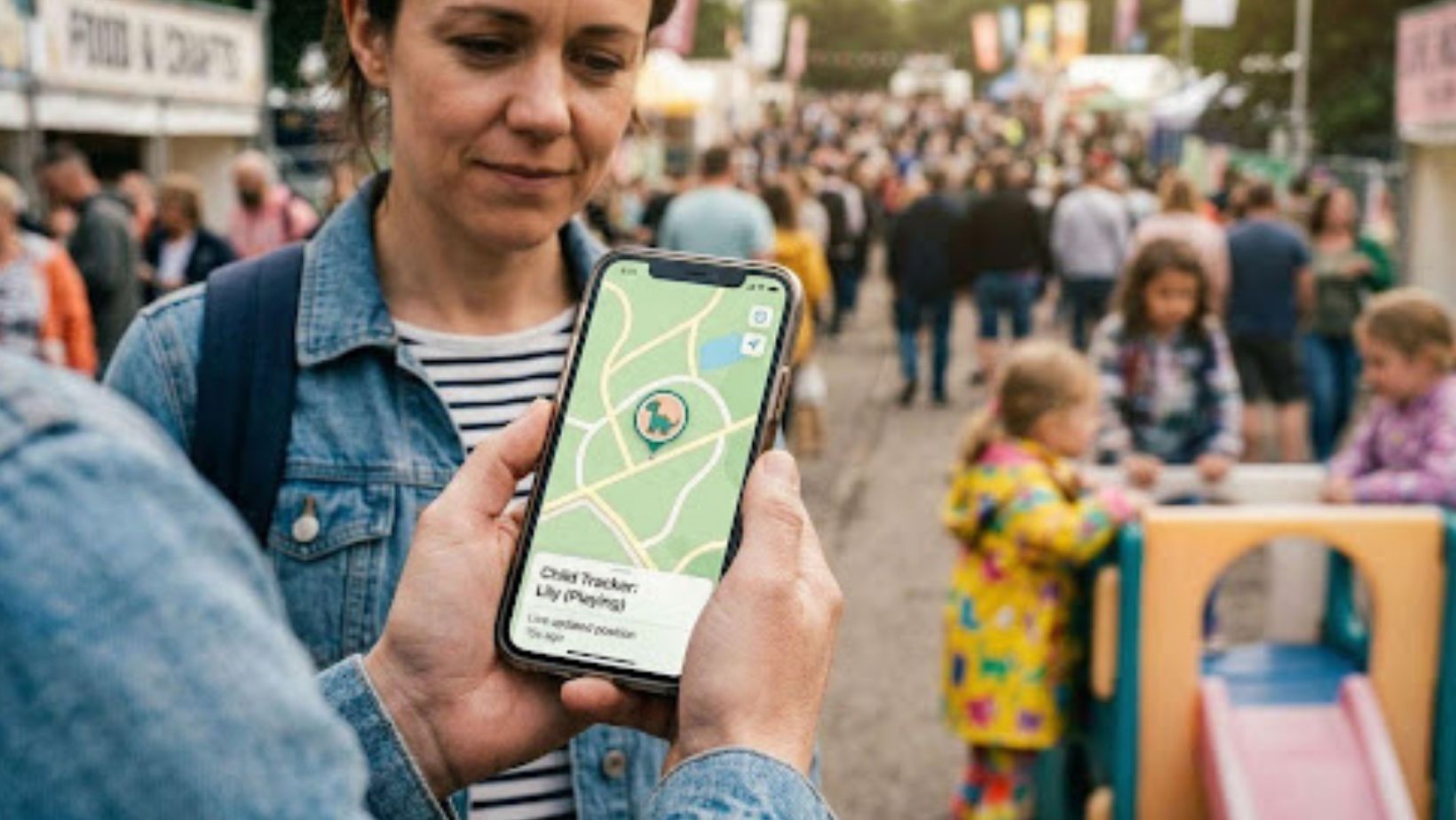
A GPS tracker for kids is one of the most practical tools available to modern parents right now. Small enough to clip onto a backpack or slip into a jacket pocket, these devices give you a live location update on your phone so you can see exactly where your child is without relying on them to remember what to do under pressure. For parents of younger children or kids with additional needs, that real-time visibility removes a significant amount of daily worry.
Most child GPS trackers also include geofencing features, which send an alert to your phone the moment your child moves outside a boundary you set in advance. For a day at an amusement park, a large outdoor event, or a theme park with multiple entry points, a geofence around a specific area means you get a notification before the situation becomes urgent rather than after.
Providers like BrickHouse GPS tracker offer compact, reliable devices designed specifically for family use, with easy-to-use apps that give parents clear, real-time visibility into their child’s location. The peace of mind that comes from knowing you can check your phone rather than scan a panicked crowd is genuinely hard to put a value on.
Teach the Difference Between Safe and Unsafe Strangers
Most children are taught not to talk to strangers, but child safety experts consistently point out that this advice, taken alone, can actually work against a child in an emergency. If a child gets lost and refuses to speak to any adult at all, finding help becomes much harder.
A more useful approach is to help children identify the types of adults they can safely approach when they need help. Research from the American Academy of Pediatrics suggests that children respond better to specific, scenario-based guidance than to broad rules they may struggle to apply under stress.
Rather than saying “never talk to strangers,” try building these conversations into your regular outings:
- Point out store employees, security staff, and other parents with children as examples of safe people to approach if they feel lost
- Role-play the conversation together at home, so they know exactly what to say and feel practiced rather than frozen in the moment
- Remind them that asking for help is always the right choice, and that you will never be angry at them for telling someone they are lost
Build Everyday Habits That Reinforce Safety Awareness
Child safety in public is not just about what happens in an emergency. The habits children build during ordinary outings are what shape how they behave when something unexpected occurs.
Staying within sight is a habit worth reinforcing from a young age, but children also need to understand why, rather than simply following a rule because a parent said so. When children understand that staying close in a busy place helps everyone enjoy the outing without worry, they are more likely to cooperate willingly rather than resist at every opportunity.
A few consistent habits that genuinely support public safety for children:
- Always check in verbally when entering a new space together, even something as simple as “Let’s stay where we can both see each other”
- Use a buddy system at large events so children feel responsible for each other as well as themselves, which builds both awareness and cooperation
- Avoid rushing between locations, since the moments when families are moving quickly and distracted are exactly when children are most likely to wander
Consistency is what turns these conversations into actual habits. Children who hear the same calm reminders before every outing eventually internalise them and begin applying them without prompting.
Dress Children in Ways That Make Them Easy to Spot
Bright or distinctive clothing might seem like a small detail, but parents who have experienced the panic of briefly losing sight of a child in a crowd know exactly how quickly a child in neutral tones can disappear against a busy background. Choosing something bright and memorable for family days out takes thirty seconds of planning and makes a meaningful difference in a crowd.
Before leaving for any large event or busy destination, take a photo of your child on your phone. If something goes wrong and you need to describe what your child is wearing, or show a security worker who to look for, having a current photo from that day is far more useful than trying to describe a face from memory under stress. Most parents know to do this in theory but forget in practice, so making it a routine habit rather than a crisis response is what actually helps.
You Cannot Predict Everything, But You Can Prepare Well
No parent can control every environment their child moves through. Crowds are unpredictable, children are curious, and even the most attentive parent looks away sometimes. Accepting that is not a failure of parenting. Recognising it is what leads to genuinely useful preparation.
The combination of consistent conversations, age-appropriate safety habits, and reliable technology gives both parents and children something valuable: the confidence to enjoy their time together in public without the low-level anxiety that can otherwise follow every outing. Preparation does not take away the joy of family adventures. Done well, it actually gives you more space to enjoy them.